


Working Days
Mon-Sat: 9.00 to 6.00
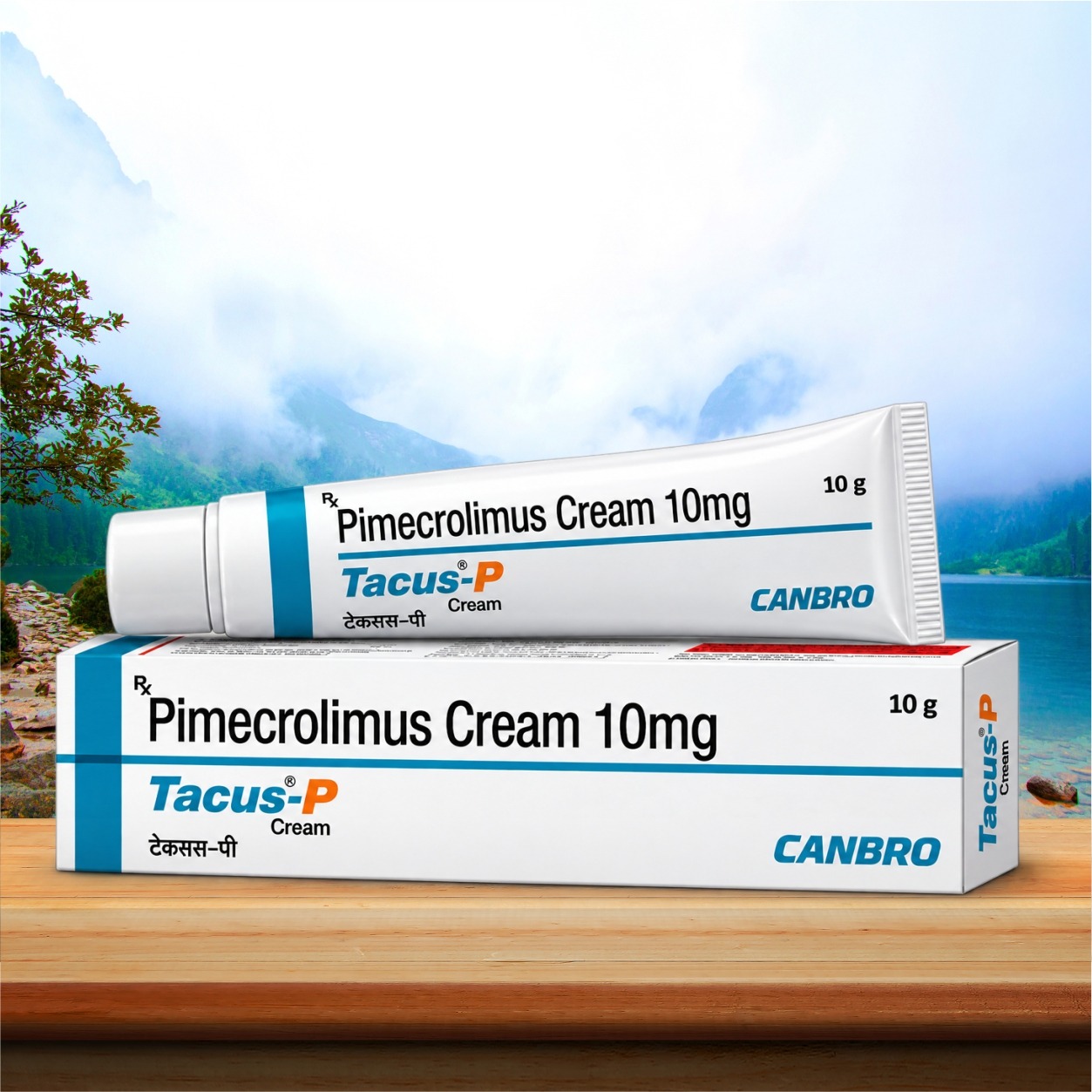
Pimecrolimus Cream 10mg
TACUS-P CREAM
Pimecrolimus Cream: Pimecrolimus is a prescription cream used to treat mild-to-moderate atopic dermatitis, which is often called eczema. It works by calming the skin and focusing on the inflammation that causes red, itchy, and irritated areas. This non-steroidal treatment is usually recommended for people who do not get better with other treatments or who need to treat sensitive regions such as the face and neck.
To get the results, you should use Pimecrolimus regularly and exactly the way your doctor told you. You usually apply it twice a day as soon as you notice redness or itching from eczema to help stop a flare-up. While using this cream, habits like taking showers with lukewarm water and using a soft, fragrance-free moisturizer can help your skin heal faster.
Medical Benefits:
- Helps Relieve Eczema Symptoms: By decreasing inflammation, Pimecrolimus helps treat itching, redness, and irritation associated with eczema, helping the skin heal more comfortably.
- Suitable for Delicate Areas: As a steroid-free treatment, Pimecrolimus may be used on sensitive areas such as the face, eyelids, and neck when prescribed, providing an alternative option for long-term management.
- Supports Skin Barrier Repair: By decreasing the urge to scratch and managing skin inflammation, Pimecrolimus helps repair the skin’s protective barrier and decreases the risk of skin damage and secondary infections.
Uses:
- Treats mild to moderate atopic dermatitis (eczema) in adults and children.
- Decreases inflammation and itching associated with skin conditions.
- Used for sensitive areas of the skin, such as the face and neck.
- Can be applied long-term without the risks associated with corticosteroids.
- Beneficial for patients who do not respond well to other treatments.
- Helps in managing flare-ups and maintaining skin hydration.
Directions to Use:
- Follow your physician’s recommendations on the dosage and timing of this medication to achieve optimal results.
- Take a small amount of Pimecrolimus on the fingertip and apply it as a thin layer on the clean and dry affected area as prescribed by your doctor.
- Do not allow Pimecrolimus to come into contact with the nose, mouth, or eyes. In case Pimecrolimus comes in contact with these areas mistakenly, rinse with water thoroughly.
Dosage:
Take this medicine as prescribed by your healthcare professional. Do not take an overdose of this medicine; otherwise, it can have a worse effect on your body.
Storage:
Place this medicine in a cool, dry place. Do not keep this medicine in front of children and pets, and also place it away from direct sunlight.
Side Effects:
- Burning
- Stinging sensation
- Mild skin redness
- Dryness
- Irritation
- Headache
- Temporary flu
- Increased skin sensitivity
Precautions:
- Pimecrolimus is used to treat eczema (atopic dermatitis) when other treatment options have failed.
- Apply thinly to affected areas of skin only. Treat the affected area and dry well before applying Pimecrolimus. Do not come into contact with water (shower, swimming) right after application.
- Clean the area to be treated with water and a non-medicated soap, and let it dry completely before using Pimecrolimus.
- Notify your physician if there’s no improvement even after two weeks of treatment, or if the skin gets worse.
- Don’t cover the affected area with airtight dressings such as bandages unless directed by a doctor, as this may increase the risk of side effects.
Frequently Asked Questions (FAQ’s):
1. What is this cream used for?
It is commonly used to manage mild to moderate eczema and reduce symptoms such as redness, itching, and skin inflammation.
2. How does it work on the skin?
It helps control inflammation by reducing the activity of certain immune cells involved in skin irritation.
3. Can it be used for sensitive skin?
It may be suitable for sensitive areas when prescribed by a healthcare professional, especially where prolonged steroid use may be unsuitable.
4. How should it be applied?
Apply a thin layer to the affected skin as directed by your healthcare professional, avoiding the eyes and mucous membranes.
5. Can it be used on the face?
It may be prescribed for facial eczema, but it should be used according to professional medical advice.
6. What are the common side effects?
Temporary burning, warmth, itching, redness, or irritation may occur, particularly during the initial days of use.
| Pack | 10g |
|---|---|
| Composition | Pimecrolimus Cream 10mg |
Related products
-

FUZIC-B
₹85.70 -

LULICARE 20gm
₹299.00 -

ATOIN 0.025%
₹76.70 -

KOLITE CREAM
₹149.60