



Working Days
Mon-Sat: 9.00 to 6.00
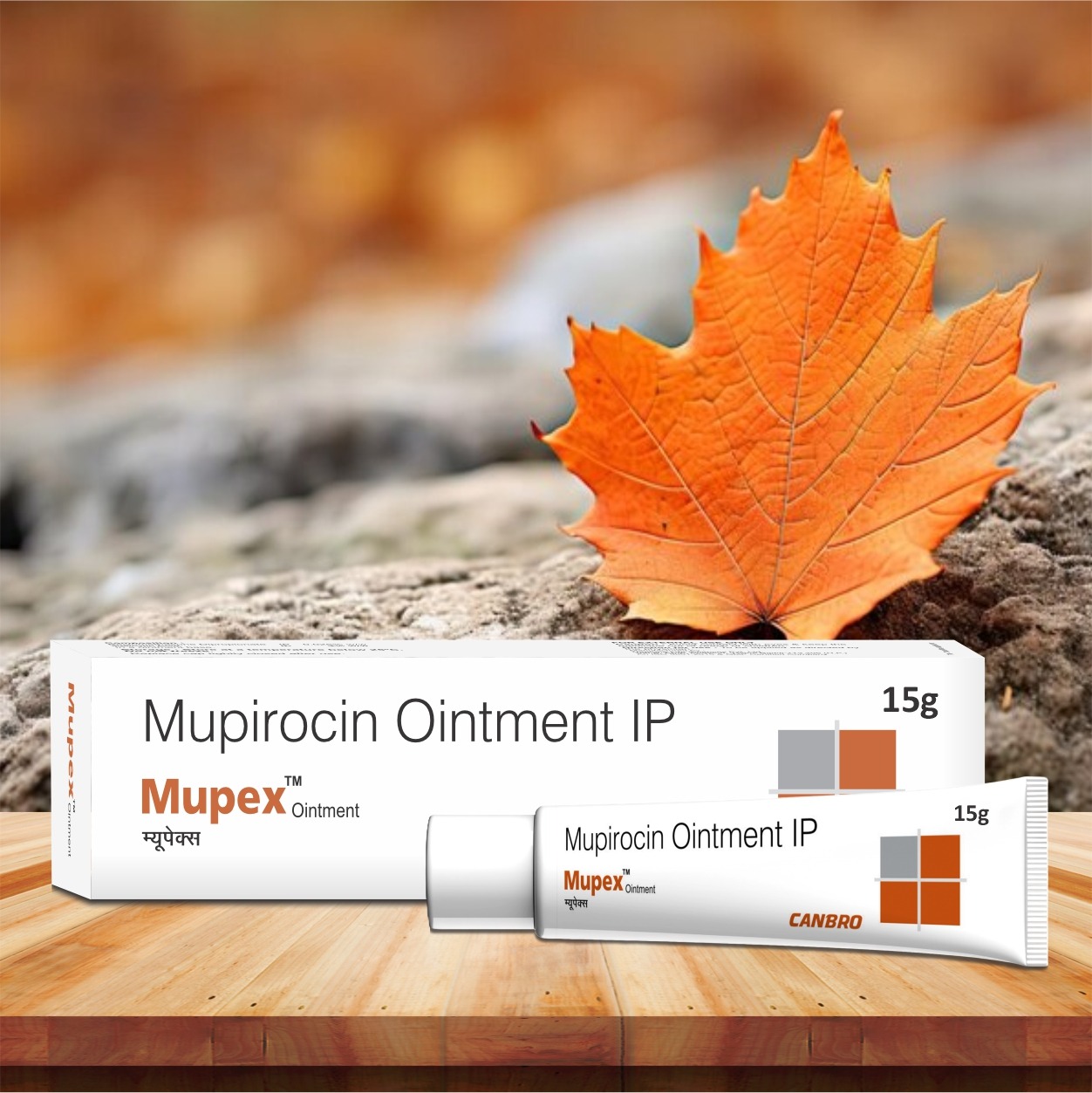
Mupirocin Ointment 2%
MUPEX OINTMENT (15g)
Mupirocin Ointment: To get the results, you should use Pimecrolimus regularly and exactly the way your doctor told you. It is usually put on twice every day as soon as you notice redness or itching from eczema to help stop a bad outbreak. While using this cream, adding habits like taking showers with water that is not too hot and using a soft, no-fragrance moisturizer can really help your skin get better.
To get the results, Mupirocin must be applied consistently and exactly as directed by your healthcare provider, usually two to three times daily. Always apply Mupirocin to clean skin after washing your hands. Good hygiene, keeping the area clean, and avoiding scratching the lesions are habits that can speed up recovery significantly.
Medical Benefits:
- Mupirocin offers targeted relief directly at the site of infection. Because it is used directly on the skin, very little of the medicine enters your bloodstream, which helps decrease the risk of internal side effects.
- By preventing bacterial growth, this medicine relieves localized symptoms like pain, redness, itching, and swelling. It enhances faster healing of skin sores and lesions, helping your skin return to its healthy state. Additionally, clearing the bacteria prevents the infection from spreading to other areas of your body or to other people.
Uses:
- Treatment of Acne: Mupirocin aids in treating acne by decreasing inflammation and bacterial growth, resulting in clearer skin.
- Management of Bacterial Skin Infections: Mupirocin treats bacterial skin infections by promoting faster healing and symptom relief.
- Impetigo: Mupirocin can also be used to treat impetigo, a highly contagious skin infection, by decreasing bacterial growth and promoting faster healing.
- Wound Care: Mupirocin is used in wound care to help treat and prevent bacterial infections by promoting a healthy environment for wounds, decreasing the risk of infection, and helping the healing process.
- Eczema and Dermatitis Relief: Mupirocin helps relieve eczema and dermatitis symptoms by decreasing irritation and stopping bacterial infections, promoting healthier skin.
Directions to Use:
- Wash your hands thoroughly with soap and water before applying the medicine.
- Clean and dry the affected skin area gently.
- Apply a small amount of the prescribed mupirocin cream or ointment as a thin layer over the affected area. Do not switch between formulations unless suggested by your physician.
- You may cover the affected area with a sterile gauze bandage if your physician advises you to do so.
- Wash your hands again immediately after applying the medicine to stop spreading the infection to other skin areas or your eyes.
Dosage:
Take this medicine as prescribed by your healthcare professional. Do not take an overdose of this medicine; otherwise, it can have a worse effect on your body.
Storage:
Place this medicine in a cool, dry place. Do not keep this medicine in front of children and pets, and also place it away from direct sunlight.
Side Effects:
- Mild burning or stinging at the application site
- Itching or redness of the skin
- Dry skin
Precautions:
- Mupirocin is used to cure bacterial skin infections such as impetigo.
- Clean and dry the affected area and apply the medicine at least 3 times a day. A dressing can be applied over the treated area if needed.
- Avoid getting it in the eyes, mouth, or nose. Rinse with cold water if you accidentally get it in these areas.
- It can cause slight irritation at the application site. Let your physician know if the irritation does not go away.
- Do not use for more than 10 days. Throw away any cream that is left over.
Frequently Asked Questions (FAQ’s):
1. What is this cream used for?
It is commonly used to manage mild to moderate eczema and reduce symptoms such as redness, itching, and skin inflammation.
2. How does it work on the skin?
It helps control inflammation by reducing the activity of certain immune cells involved in skin irritation.
3. Can it be used for sensitive skin?
It may be suitable for sensitive areas when prescribed by a healthcare professional, especially where prolonged steroid use may be unsuitable.
4. How should it be applied?
Apply a thin layer to the affected skin as directed by your healthcare professional, avoiding the eyes and mucous membranes.
5. Can it be used on the face?
It may be prescribed for facial eczema, but it should be used according to professional medical advice.
6. What are the common side effects?
Temporary burning, warmth, itching, redness, or irritation may occur, particularly during the initial days of use.
| Composition | Mupirocin Ointment 2% |
|---|---|
| Pack | 15gm |
Related products
-

SALSO 6%
₹83.00 -

-

-

COVATE – MF
₹73.10