




Working Days
Mon-Sat: 9.00 to 6.00
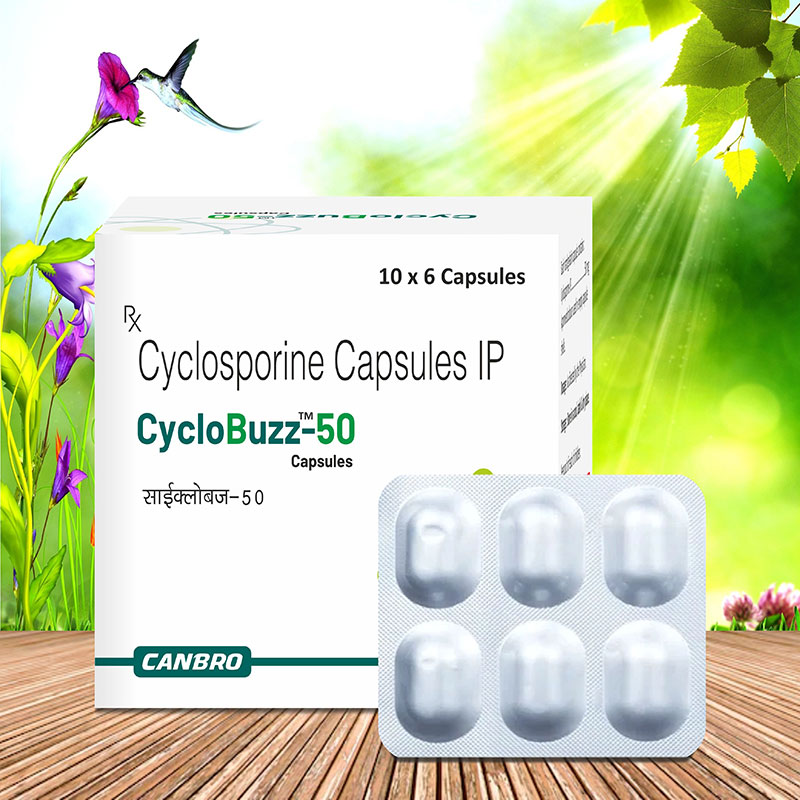
Cyclosporine Capsules IP
CYCLOBUZZ-50
Cyclosporine refers to the category of medicines which is known as ‘immunosuppressants’. It is used to reduce organ rejection after a transplant. It also helps to reduce the pain/inflammation in rheumatoid arthritis situations and the treatment of psoriasis. Organ rejection is caused when the patient’s immune system allows the donor organ.
How do Cyclosporine capsules work (mechanism of action)?
Cyclosporine Capsules work by preventing your body from producing certain parts of the immune system. This reduces the activity of the immune system, so it does not attack areas of your body or recognise a transplanted organ.
How should you take Cyclosporine Capsules?
- Do not take with grapefruit juice. Swallow whole capsules. Do not break or chew the capsule. Use as directed on the prescription label. Take your medication at regular intervals. Take the capsules at the same time every day and at the same time about meals. Do not take more often than instructed. Do not discontinue except on the advice of your doctor.
- Consult your paediatrician about the use of this medicine in children. Although this medication is prescribed to children as young as 1 year for specific medical conditions, there are limitations.
- People over 65 years of age may react more strongly; these people may need a smaller dose.
- In case of suspected overdose, get immediate medical attention at a poison control centre or emergency room.
Medical Benefits
- It is used to stop organ transplant rejection.
- It also protects the body’s immune system by reducing the formation of white blood cells in the body.
- It helps to reduce pain and swelling in arthritis
Side Effects
- Headache
- Vomiting
- Nausea
- High blood pressure
- Loss of appetite
- Diarrhea
Warnings & Precautions
Who must not take cyclosporine?
Allergies to Ingredients. Individuals who are allergic to any of the following must not take cyclosporine.
- Cyclosporine
- Gengraf
- Neoral
- Sandimmune
- Any of the ingredients in the particular product dispensed
- Your pharmacist can inform you of all the ingredients in the particular cyclosporine products they carry.
- Special Conditions in Individuals with Rheumatoid Arthritis or Psoriasis.
- Individuals with rheumatoid arthritis or psoriasis who experience kidney issues, poor control of high blood pressure, or cancer are not supposed to use cyclosporine.
Interactions. When you have psoriasis, cyclosporine capsules must not be used when you take some other medications or treatments. Inform your doctor about any prescription or over-the-counter (OTC) medications, vitamins/minerals, herbs, and supplements that you are taking before taking cyclosporine.
What should I know before taking cyclosporine capsules?
- Do not use cyclosporine capsules unless it has been prescribed to you by a doctor. Use it as directed.
- Do not share cyclosporine capsules with other individuals, even if they are the same as yours. It could cause them harm.
- Your doctor may have blood tests and other assessments taken before and after initiating cyclosporine capsules.
- Keep cyclosporine away from children.
Frequently Asked Questions (FAQs):
1. What are the uses of Cyclosporine Capsules?
Cyclosporine Capsules are well known as immunosuppressant medicines that treat autoimmune disorders and organ transplant rejection.
2. How does the Cyclosporine Capsule work?
They inhibit T-cell activation and suppress the immune system, thereby helping in controlling inflammation and immune response.
3. What strengths of Cyclosporine Capsules does Canbro Healthcare offer?
Canbro Healthcare has several strengths in the demand for PCD and third-party manufacturing.
4. What are the common side effects of this medicine?
The side effects may include hypertension, headache, tremor, renal insufficiency, and hypertrichosis.
5. Are Cyclosporine Capsules safe in pregnancy?
Pregnant ladies can use this medicine after the consultation of your healthcare expert.
| Brand Name | CYCLOBUZZ-50 |
|---|---|
| Composition | Cyclosporine 50mg |
| Pack | 10×6 |